
Para Hockey is for real men. Sometimes it’s a real massacre, says the coach of the representation
Jiří Bříza, the coach of the Czech hockey team was talking to Miroslava Sloupová about para hockey for Aktuálně.cz. If you want to find out what this sport has to do with massacre and what are the differences in the rules between para hockey and classic ice hockey, just read the article.
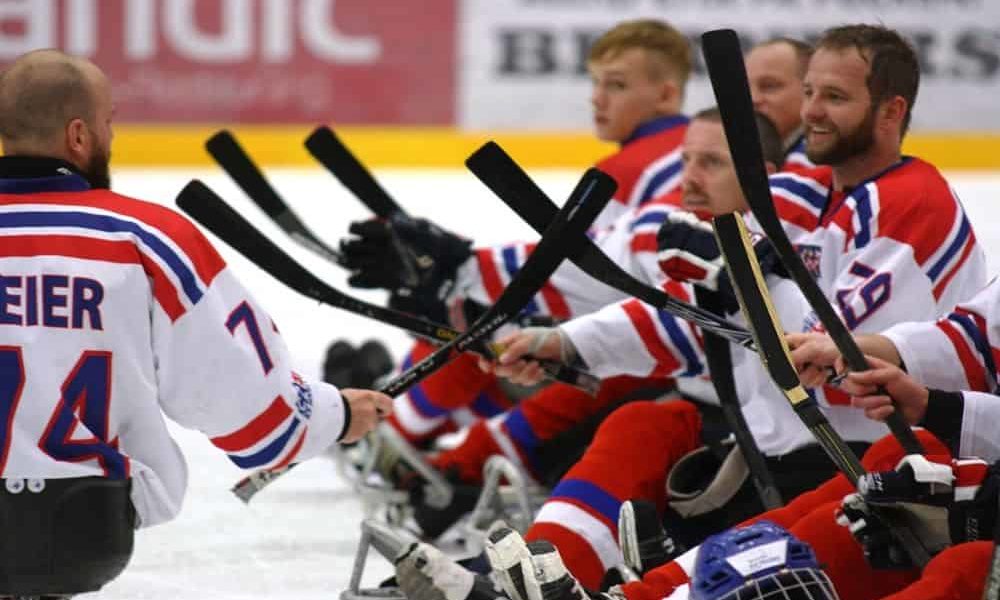
Czech sledge hockey players I Foto: ČATHS
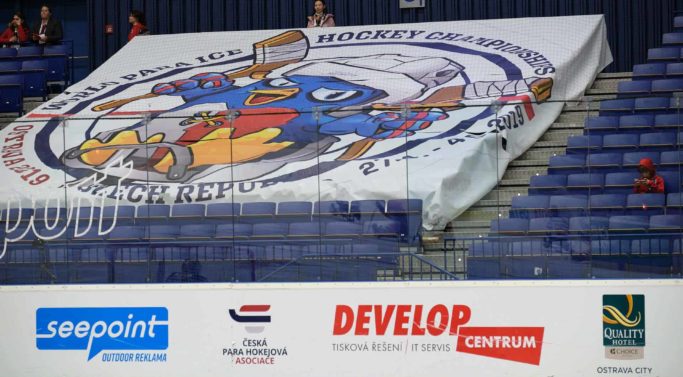
Jiří Bříza graduated from the Faculty of Physical Education and Sport, where he focused on coaching. Para hockey was not his primary goal, but he’s spent the last 7 years as a head coach with the team of the best Czech handicapped hockey players. For this year’s season, he has a single goal in mind – to succeed in the domestic world championships in Ostrava and try to reach the gold medal.
How did you get to para hockey?
A mere coincidence! I came after many years abroad and at home, in Studénka I saw an ad for a sledge hockey game- Studénka against Sparta on the ice rink. I went to have a
look and after a while, I arranged to coach the home Studénka team. So I started at a league level with the Studénka team, continued with a team in Olomouc until I got to the position of assistant coach of the national team under the leadership of Mr. Hornich. I became the coach of the Czech national team later in the 2012/2013 season, with Jakub Novotný and Michal Tereska as current assistants.
What do you think is different about training physically disabled athletes?
Everything and nothing depends on the point of view. We are so well matched together in the team that we don’t see any differences. Of course, some deviations will be found, especially from the specifics of the Para hockey and its conception. For example, the physiology of sports, the biomechanics of players on sleighs, psychology, and, most importantly, the method of training.
And what about the game?
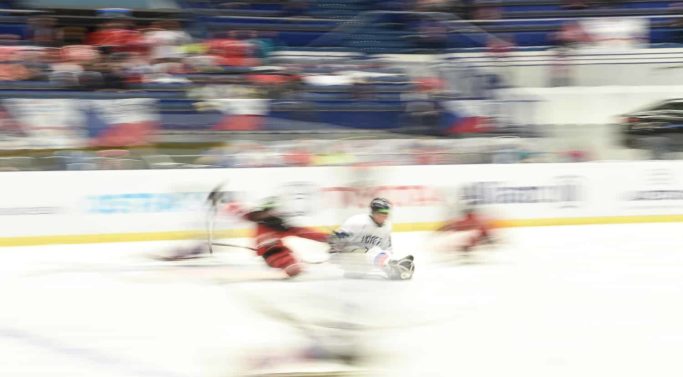
There is one major difference. Players use their arms to move (skate), but they also need them to hit the puck, which entails high demands on movement coordination and the art of controlling the puck with both hands. Classic hockey uses legs to skate, arms take care of making passes and scoring. In a broader sense, our sport is very demanding on logistics. For example, it’s not easy when we play a tournament outside the Czech Republic and we always have to bring hockey equipment, sledges, wheelchairs and personal luggage on the plane for the person, the tools, spare parts for the sledge, medicine for the whole team.
Are there any specifics in this sport, apart from ways of movement that would surprise a classical ice hockey spectator?
Among other things, the fact that the players do not reverse prevent players of the opposing team to move towards the goal. The defenders enclose their opponents into so-called funnels, etc. There is, therefore, another way of defending. The spectator can also be surprised by the assessment of fouls. For para hockey, one typical foul is called
“Teeing”. That means that a player makes contact and hits the front frame of his sledge into his opponent, especially while he is holding the puck.
Do you feel the players have a different setting, such as a stronger will to do something and get over the obstacles of fate? Para hockey is a game for real men, sometimes matches are a massacre, the concept and complexity often resemble rugby. All players are stronger mentally, they enjoy being together on the ice, yet they still want a good result. With determination and the art of play, they often inspire the general public, because you can’t cheat your way out on the ice. It’s a sport without excuses for real men.
Does, as a coach, working with handicapped people enrich you?
Yes, cooperation with handicapped people does enrich me, but so does confrontation with implementation teams of all countries. I am also happy for training on the ice. The ones that have a spark, the guys feel that and that sticks to their hockey sticks. Most of all, I enjoy the struggle during the matches and the feeling when we all dive into the game and we free ourselves from everything around us. We don’t think about anything other besides how to make the match a good one. Of course, we have funny stories from our collaboration. Our domain in our sport is undoubtedly black humor. It maybe wouldn’t even work without it. However, that will stay behind the walls of our dressing room.
Has your attitude changed towards the players, how do you perceive your team now?
It changed partially. In approximately six years that I’ve spent with the team, it’s all about knowledge and constant change. Players have undergone some changes, both individually and as a whole. The change becomes even more visible with the intense preparation for the World Championships. Players are mentally stronger and more mature, improving their physical condition gave them a healthy self-confidence, so they can spend more time in the rink. On the other hand, we are getting older, the average age of the players is among the highest on an international level, so we will see what the preparation will bring us. We will be reaching out to new potential para hockey players at the World Championships in order to complete the generational change in the team and look for participation in the 2022 Winter Paralympic Games in Beijing.
So far, you have not been able to reach the medal positions with the team, why should it work out this season?
This season the ball is in our court for several reasons. We’re playing at home, we have the domestic environment, the fans. Thanks to the organizing we have the best possible preparation so far. Another fact is that the team of Russia is not participating in the Championships this year, which would be considered to be one of the favourites, together with the teams of USA and Canada. It will be an open battle for the bronze, the goal of our team is to advance to the quarterfinals and be to succeed in it.